
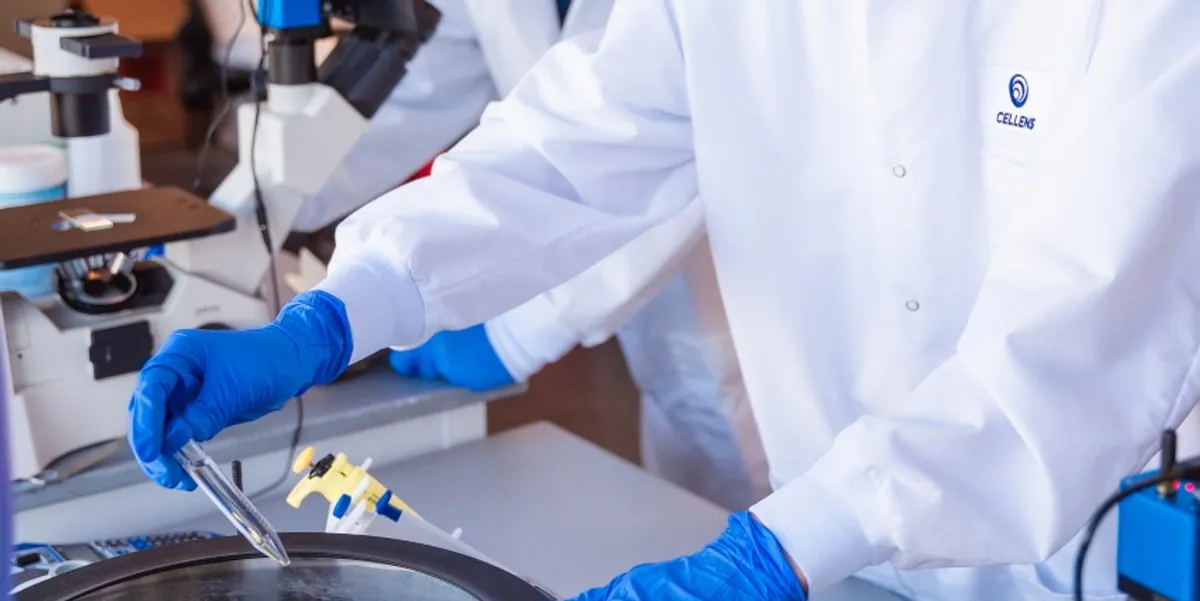
A physics-based urine test shows early promise in detecting bladder cancer recurrence without invasive procedures.
Bladder cancer remains one of the most expensive cancers to monitor, not because treatment is uniquely complex, but because recurrence is common and surveillance is invasive and costly.
Cystoscopy, the gold standard for detecting bladder tumors, lets clinicians evaluate the number, size, and location of tumors. However, while cystoscopy is generally sensitive and reasonably specific, it is not perfect. Small or flat tumors can be missed, and the procedure can cause pain, bleeding, urinary tract infections and other complications. These limitations have driven clinicians to seek reliable, non-invasive alternatives, such as urine-based diagnostics.
However, despite decades of effort, urine-based diagnostics have struggled to reliably rule out recurrence, particularly for low-grade disease. A Boston-based startup, Cellens, is betting that the problem isn’t a lack of biomarkers, but a reliance on the wrong kind of signal. Rather than searching for molecular traces of cancer in urine, the company is measuring something more fundamental: how cancer cells physically feel.
The company recently raised a $6.5 million seed round following early prospective clinical data generated with Harvard’s Brigham and Women’s Hospital and Dana-Farber Cancer Institute. In a study analyzing nearly 100 patient urine samples, Cellens’ non-invasive bladder cancer test detected all recurrence cases, achieving 100 percent sensitivity and 100 percent negative predictive value. The results significantly outperformed FDA-cleared molecular assays, which typically report sensitivities around 60–65 percent and frequently miss low-grade tumors.
Leveraging different biomarkers
What differentiates Cellens’ approach is its foundation in mechanobiology, a field that studies how physical forces and mechanical properties influence cell behavior. According to Phuong Jean Pham, founder and CEO of Cellens, the physical characteristics of cancer cells can reveal disease in ways molecular markers often cannot.
Cancer cells often feel softer than normal cells because of fundamental changes in their cytoskeleton, nucleus, and mechanical regulation that enable invasion, survival, and growth.
– Phuong Jean Pham, Cellens
“Cancer cells often feel softer than normal cells because of fundamental changes in their cytoskeleton, nucleus, and mechanical regulation that enable invasion, survival, and growth,” Jean Pham told DDN. “Cancer cells deliberately remodel their cytoskeleton and nucleus so they can squeeze through tight spaces, tissues, and metastasize. This is a well-established understanding in mechanobiology that has direct implications in cancer diagnostics.”
Cellens measures these mechanical changes at the single-cell level using atomic force microscopy (AFM), a nanoscale instrument capable of physically probing individual cells. Unlike traditional diagnostics that infer disease indirectly through gene expression or protein markers, AFM allows researchers to directly measure cellular stiffness and other biophysical properties.
From a patient’s perspective, the test begins and ends with a urine sample. Inside the lab, however, the process is more complex. The sample undergoes proprietary preparation and fixation steps before being scanned with AFM. The resulting data — generated from millions of cell–probe interactions — is then analyzed using machine learning to produce a diagnostic result.
Once a urine sample reaches the lab, results can be generated within three to five business days, a timeline comparable to other high-complexity urine-based assays. At present, the test remains in development within Cellens’ research and development laboratory and is not yet available for clinical or commercial use.
Where molecular biomarkers fall short
The company’s new mechanobiology and AI-driven platform, BioFeel, reflects mounting challenges in molecular diagnostics, where biological heterogeneity can limit test performance. “Because bladder cancer is a heterogeneous disease and recurrent tumors can evolve genetically and pathologically over time, current molecular tests are only able to capture a particular subset of tumor recurrence, and for the most part, often fail to detect low-grade tumors,” Jean Pham said.
In contrast, the mechanical properties of cancer cells could provide a more stable and universal signal. While genes and proteins can vary across tumors and over time, the physical requirements of invasion and survival impose common constraints on cancer cells. Cellens is leveraging that consistency to create what it describes as a biophysical fingerprint of disease.
This shift — from biology to physics — could have meaningful clinical implications. A urine test capable of reliably ruling out recurrence would allow urologists to reduce unnecessary cystoscopies, improving patient quality of life while lowering healthcare costs. With US bladder cancer spending projected to reach $11.6 billion annually by 2030, even modest reductions in invasive procedures could have outsized economic impact.
Beyond bladder cancer surveillance, Cellens views its BioFeel platform as broadly adaptable. While each application requires its own trained model, the underlying combination of mechanobiology, nanoscale measurement, and machine learning can be extended to other use cases.
“The BioFeel platform, which contains proprietary wet lab protocol, a large trained dataset, and analysis, can be used to build models that are applicable for different clinical use cases, such as biomarker discovery, drug efficacy testing, and minimal residual disease testing,” Pham said.
If mechanobiology can deliver on its early promise, it may not only improve how bladder cancer is monitored but also redefine what constitutes a biomarker in modern medicine.
