
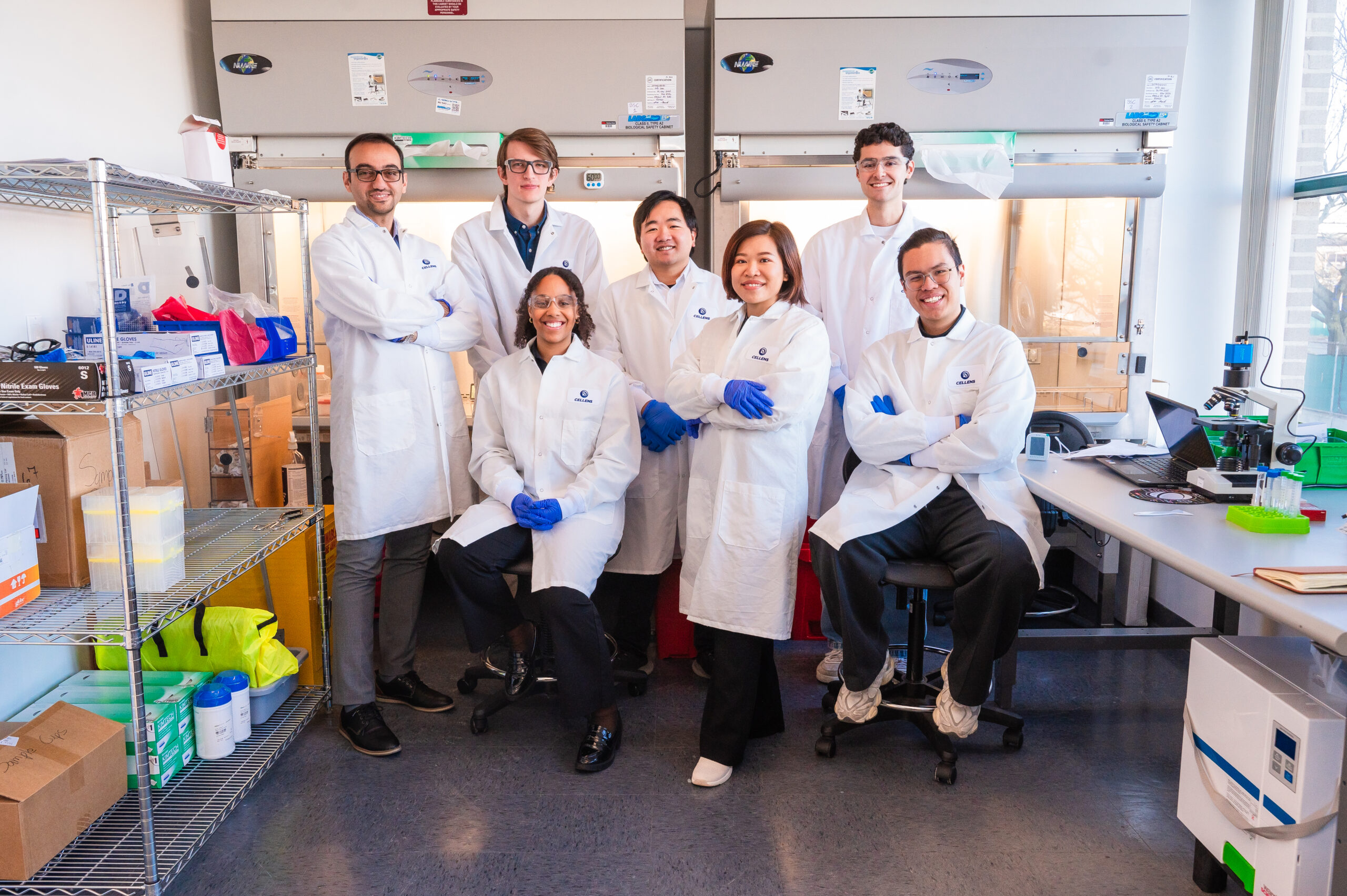
Boston-based company Cellens secured $6.5 million to develop its platform that detects bladder cancer through an approach that combines physics and AI, End-points News learned exclusively.
Its technology is a departure from the norm in cancer diagnostics, in which scientists largely rely on molecular markers inside the cell. Cellens uses atomic force microscopy, which “feels” the stiffness of cells to identify a cancer’s biophysical fingerprint rather than its molecular signature. The technology is combined with machine learning algorithms trained on millions of cell interactions.
“The physics of cancer reveals a lot,” Cellens founder and CEO Jean Pham told
Endpoints.
Cellens aims to leapfrog molecular tests that routinely miss bladder cancer recurrence, while reducing the need for procedures, such as invasive cystoscopies to view the inside of the bladder.
Soon-to-be published data from an initial prospective clinical study of 100 patients showed the company’s urine test detected all recurrences, with a diagnostic accuracy (AUC) of 88%, according to the company.
The company’s initial focus is on recurrence surveillance, which could also help drugmakers assess their drugs in clinical studies, Pham said. She said its technology could be applied to eventually detect other types of cancer.
SOSV led the seed round. The Labcorp Venture Fund, American Cancer Society
BrightEdge and others also invested.
Cellens, spun out of Tufts University, plans to use the funds to further validate its
technology, expand a research and development partnership with the diagnostics
company Bruker, and build out a lab.
